Celvera Biosystems builds field-deployable diagnostics and cloud AI that detect disease where it starts — in shrimp ponds, health posts, farms, and waterways across Southeast Asia. One platform. Many diseases. Every species. Real-time intelligence.
Every year, invisible pathogens destroy billions of dollars in food production and cross species barriers before anyone sees them coming. The infrastructure to detect them does not exist where it is needed most.
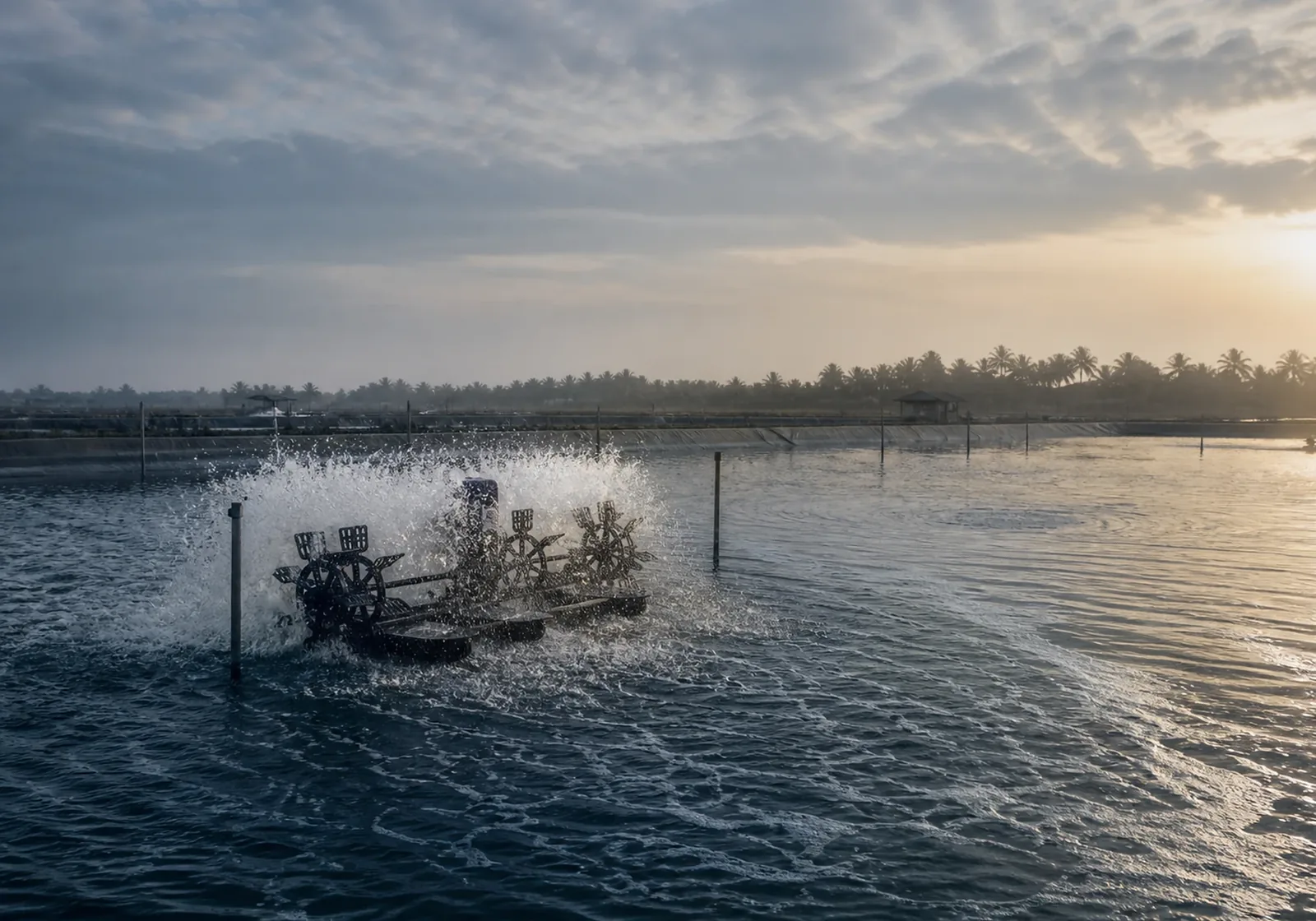
The tropical belt of Southeast Asia is one of the most biologically productive regions on earth — and one of the most diagnostically fragmented. Farmers lose entire production cycles to pathogens they cannot see. Rural health workers treat patients on clinical suspicion alone. Environmental threats go undetected until damage is irreversible.
The science exists. LAMP, AI microscopy, cloud analytics — all proven. What does not exist is the standardised operating infrastructure that brings them together into one field-deployable system that works in the humidity, the heat, and the dust of the environments that need it most.
Hardware, consumables, and intelligence designed to reinforce each other. A new disease target means designing a new cartridge — not a new device. A new test anywhere makes every device smarter.
Ruggedised diagnostic readers built for tropical conditions — battery and solar capable, dust and humidity resistant, with on-device AI inference and zero internet dependency.
Sealed cartridges containing all reagents, primers, and stains for a specific assay. Insert sample, load cartridge, read result. No pipetting, no manual staining, no biosafety risk.
Cloud-based AI platform aggregating diagnostic, sensor, and environmental data into real-time disease analytics, outbreak mapping, and farm-level intelligence — across human, animal, and environmental domains on one network.
Disease does not respect species boundaries. Avian influenza moves from poultry to humans. Antimicrobial resistance develops in livestock and transfers to human pathogens. Celvera is the first diagnostic platform architected to monitor all of it on one network.
Five-pathogen shrimp panel covering EHP, WSSV, AHPND, IMNV, and IHHNV — the diseases responsible for the majority of production losses across ASEAN.
Malaria, dengue, tuberculosis, and soil-transmitted helminth panels for remote primary care and field epidemiology.
Quantitative parasite monitoring and coccidiosis assessment — the data backbone for anthelmintic resistance tracking and poultry production economics.
Phytoplankton identification and harmful algal bloom early warning — feeding the environmental surveillance layer.
The first commercial deployment is a sealed multi-pathogen panel covering the diseases responsible for the bulk of shrimp production losses across Southeast Asia — quantitative, field-deployable, and designed for non-specialist users at farm or hatchery.
Every competitor in this space optimises for one pathogen, one species, one setting. Celvera is built from the ground up for the ecosystems where convergent disease risk is highest.
Designed for extreme humidity, heat, dust, and intermittent power. Battery and solar capable. Built for the environments where existing lab equipment fails.
All AI inference runs on-device. Zero internet required for a diagnostic result. Cloud connectivity is a sync layer, not a dependency.
Protocol Cartridges handle every step inside a sealed format. No pipetting. No staining. No biosafety risk. No human error.
One reader runs cartridges across aquaculture, healthcare, livestock, and environmental monitoring. Every competitor is locked to one domain.
Both molecular detection (LAMP) and AI microscopy on a unified platform. No competitor combines both modalities in a single ecosystem.
Nexus learns from every test across every domain. A data flywheel that compounds with adoption — and that a single-disease device can never replicate.
Every Sentry device deployed generates structured, machine-readable, tamper-resistant diagnostic data. That data flows into Nexus, where AI models improve with every sample. Better models drive better outcomes. Better outcomes drive adoption. More adoption means more devices, more data, and a compounding network effect.
This positions Celvera as the foundational data infrastructure for the services aquaculture and One Health systems urgently need — parametric insurance, export certification, supply-chain traceability, and government disease surveillance.
Celvera Biosystems is incorporated and headquartered in Singapore. The Singapore parent owns all intellectual property; manufacturing partnerships, cloud infrastructure, and regulatory pathways are anchored there. Indonesia is the first field operations base — chosen for its scale, pathogen burden, and proximity to the aquaculture and One Health markets the platform is designed to serve.
The company is founded on deep domain expertise across diagnostics engineering, AI systems, aquaculture, and Southeast Asian market operations. The team is moving fast, building with precision, and working alongside academic, manufacturing, and commercial partners who have spent careers solving the problems Celvera is now consolidating into one infrastructure layer.
We are in active conversation with aquaculture operators, integrators, feed companies, insurers, research institutions, government agencies, and investors across Southeast Asia. If you share our view that the region needs better biosurveillance, we would like to hear from you.
Email info@celverabiosystems.com